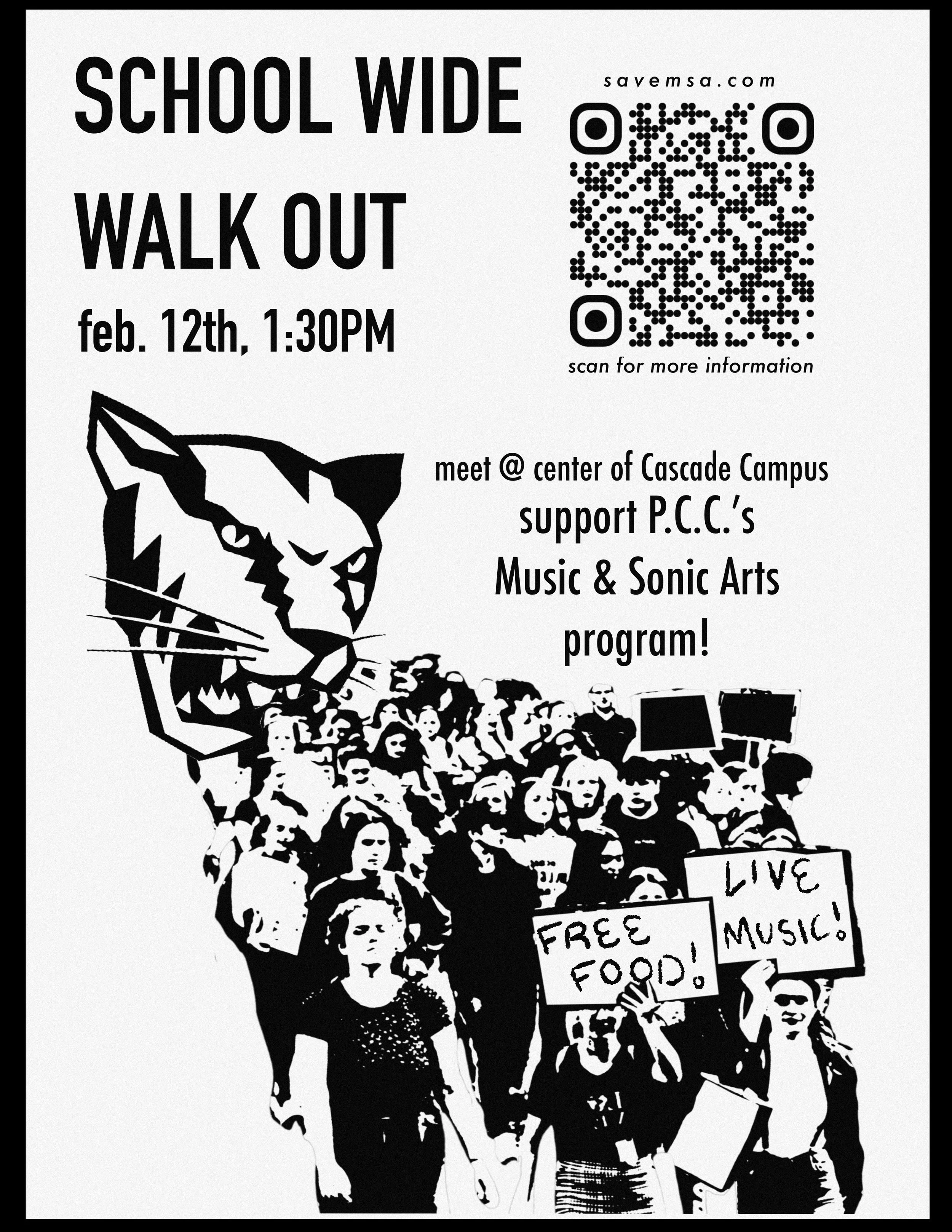
SCHOOL WIDE WALK OUT
FEB. 12TH, 1:30PM
Meet at center of Cascade Campus
FREE FOOD
LIVE MUSIC
SAVE MSA
•
SAVE MSA •
The Music and Sonic Arts program at PCC is the ONLY post-secondary, community music program in NE Portland. This program has existed under various names since 1980, but last spring top administrators at PCC suddenly decided to close it. This decision was based on incorrect data and false claims, which have now been debunked. MSA is slated for closure unless the PCC Board votes to reverse that decision. We need 4 out of the 7 board members to vote “yes” on a resolution to keep the program open! This is an equity issue. ALL Portlanders deserve equal access to our shared resources.
Did you know you already pay for PCC through your rent or property taxes? What classes and degrees do YOU want PCC to offer? What classes you YOU want to take? All PCC district residents are represented by an elected PCC board member. Your voice matters.
The administration’s decision to close MSA was based on incorrect data and false claims.* While claiming financial necessity, admin admitted that they haven’t done a financial impact report - which means they have no idea if cutting MSA would actually save money. In fact, it might actually cost PCC money to cut the program. Our classes are full (with waitlists), our enrollment is up and climbing, and our grad rates are better than PCC average!!
*see more info below the map
Meanwhile, PCC’s spending on management has increased by 28% since 2018 🤔🤔🤔

According to a study done by PSU, there are approx. 23,000 music industry jobs in Oregon, generating $1 billion in labor income, and $3.8 billion in economic output for the state… This sector contributes $68 million in tax revenue and almost $700 million in economic activity for restaurants, hotels, retail and transportation.
https://www.oregon.gov/biz/Publications/Emerging_Industries/CommercialMusicIndustry.FullReport.pdf
Comparison to other CTE programs by number of jobs in Oregon:
Music Industry: 23,000 jobs in Oregon
Dental Hygienists: 2,930
Welders: 6,485
HVAC Installers: 3960
(click number for source)
MUSIC IN OREGON IS REAL BUSINESS. LET’S SUPPORT OUR HOMEGROWN TALENT!
The MSA program is a 2 year, “all killer, no filler” professional music program designed by working artists that results in an AA degree or certificate. We teach recording, coding, production, theory and more, with an emphasis on the technological skills necessary for industry success. This program is here for YOU, but we need to protect it. Contact your elected PCC Board member and tell them to reverse the decision to cut MSA!
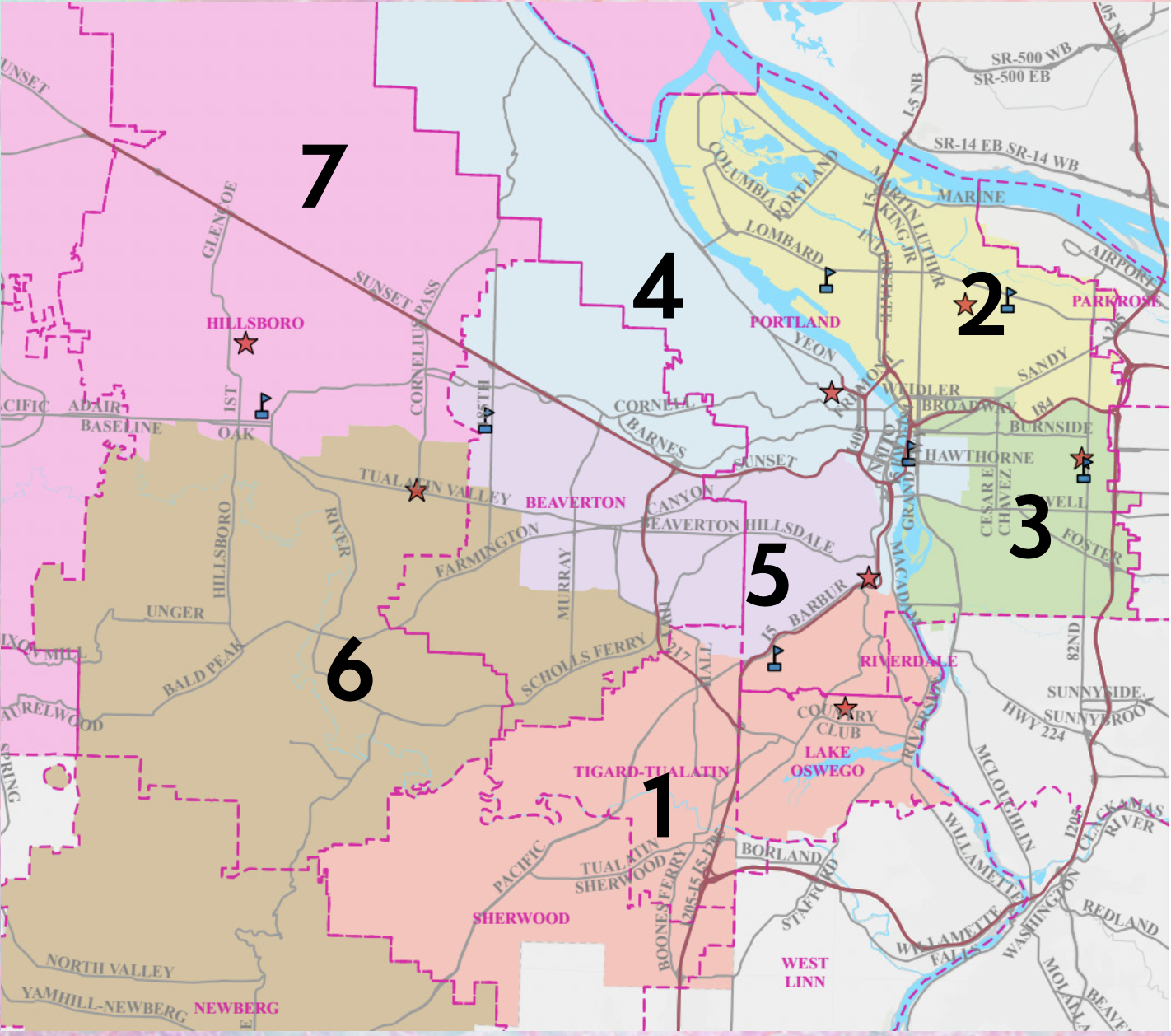
PCC board member districts
1 - laurie.cremonawagner@pcc.edu
2 - tiffani.penson@pcc.edu
3 - kien.baotruong@pcc.edu
4 - brandy.penner@pcc.edu
5 - dan.saltzman@pcc.edu
6 - gregory.mckelvey@pcc.edu
7 - gina.sanchezroletto@pcc.edu
GENERAL BOARD EMAIL: boardmember@pcc.edu
Let them know that cutting MSA is a mistake. This program has existed in North Portland for over 45 years! It’s the only post-secondary community music program on the East Side, and the most affordable music program in town.
Save Music & Sonic Arts Info Sheet
Many MSA students would not earn a degree at all without this program. Closing it removes a vital, publicly accessible pathway into Portland’s music technology workforce and directly contradicts PCC’s mission of access, equity, and workforce education.
The PCC Board of Directors can still reverse this decision that was made unilaterally by top PCC administrators. The board members are our elected officials and they have a duty to represent us. We need 4 out of the 7 board members to vote “yes” on a resolution to keep the program open.
Here’s what you can do to help: email your Board member and tell them clearly and publicly that you support this program, that you know about the PCC administration’s false claims detailed below, and that you oppose MSA’s closure. They are your elected officials, and if they hear from enough of us, they have to listen. Board member emails are listed above with a district map.
Community voices matter— yours is needed now! Key points of information are outlined below.
Where the PCC Administration’s Claims Do Not Match Reality
Claim by PCC Administration: “Closing MSA is fiscally responsible and necessary.”
Reality:
The administration has acknowledged there is not enough information to determine whether closing the program would save money. Actually, the administration has no idea how much money would be saved.
Closing the program may actually cost PCC money, due to required teach-outs, loss of tuition from currently full classes, and restricted use of federally funded equipment.
Claim by PCC Administration: “Traditional music degrees already meet workforce needs.”
Reality:
Industry professionals consistently state that traditional music bachelor’s and master’s degrees do not prepare students for modern music technology, creative coding, live sound, or audio engineering careers. Music & Sonic Arts was intentionally designed—with industry advisors—to meet current workforce needs using industry-standard tools.
Action by PCC Administration: Closing MSA with no regard to high enrollment in our classes.
Reality:
Classes are full, many with waitlists, even in a national crisis of low college enrollment
137.5 full-time student equivalents last year, and Fall 2025 enrollment is strong
Colleges in the region are aware of our closure and have reached out to MSA faculty saying that they are eager and ready to serve our students. These colleges realize the high demand for MSA curriculum and see it as an opportunity to grow their own programs if ours closes.
Earlier claims by the administration relied on misgrouped data that combined unrelated programs, which made it appear that MSA had much lower enrollment than it does.
Claim by PCC Administration: “Graduation rates are too low.”
Reality:
The Board was initially provided data that counted students who declared the major only to register and never took a single MSA course. When measured correctly—using active majors:
25% completion rate (2024–25)
30% completion rate (2023–24)
PCC overall average: 18.4%
MSA graduates actually complete at higher than the college average.
Action by PCC Administration: Closure of MSA will likely result in students’ loss of access to the program’s valuable equipment.
Reality:
Much of MSA’s equipment was purchased with Federal Perkins Grant funding, including a $70,000 recording console. The console was purchased this past spring, only 2 months before the program was suddenly slated for closure.
Federal law prohibits Perkins-funded equipment from being used by non-CTE programs. There are no exceptions. Improper use could risk fines or loss of Perkins funding for all CTE programs at PCC. This equipment will likely be totally unusable by PCC students if MSA closes. The decision to close the program was made without knowing what would happen to any of these valuable resources.
Claim by PCC Administration: “Music & Sonic Arts must prove that aspiring music tech workers need an MSA degree to get hired in the field.”
Reality:
This has never been a requirement for the program to remain open. Neither PCC policy nor Oregon’s Career & Technical Education (CTE) standards require a program to demonstrate that a degree is strictly necessary for employment. CTE programs are evaluated based on labor market need, collaboration, alignment, design, and capacity.
Music & Sonic Arts was approved under these standards and remains in compliance. The assertion that the program must prove degree necessity is factually incorrect and contributed to a decision based on misstated criteria. (Regardless of these criteria, the MSA degree is a major asset to employment, which we have proven in our data collected from local industry employers.)
Real Jobs, Real Graduates
Recent MSA graduates work at: Meow Wolf, Meta/Facebook, Splice, Portland Thorns, Revolution Hall, OMSI, PCC, IATSE Local 28, Rose City Sound, Keller Auditorium, KPSU, EMS Studios, and many, many more job placements.
What You Can Do
The PCC Board of Directors can reverse this decision.
CONTACT PCC BOARD MEMBERS VIA THIS LINK and let them know that you know about the errors in the program review process, that you know about the false claims by the administration, and that you oppose MSA’s closure. We need your voice to be heard!